
Caladenia argocalla & Lachnagrostis limitanea
White Beauty Spider-orchid
Location
Sevenhill Winery & Northern and Yorke Region
Northern and Yorke
Project Lead
Tessa Carella and Doug Bickerton
Key Partners
Sevenhill Winery, Northern & Yorke Landscape Board, Native Orchid Society of South Australia (NOSSA), Friends of Spring Gully Conservation Park
Grants & Funding: Landscapes SA Grassroots Grant and Sevenhill Winery partnership contribution
2024–2025 Milestones
- Successfully surveyed 843 plants of Caladenia argocalla in October 2026.
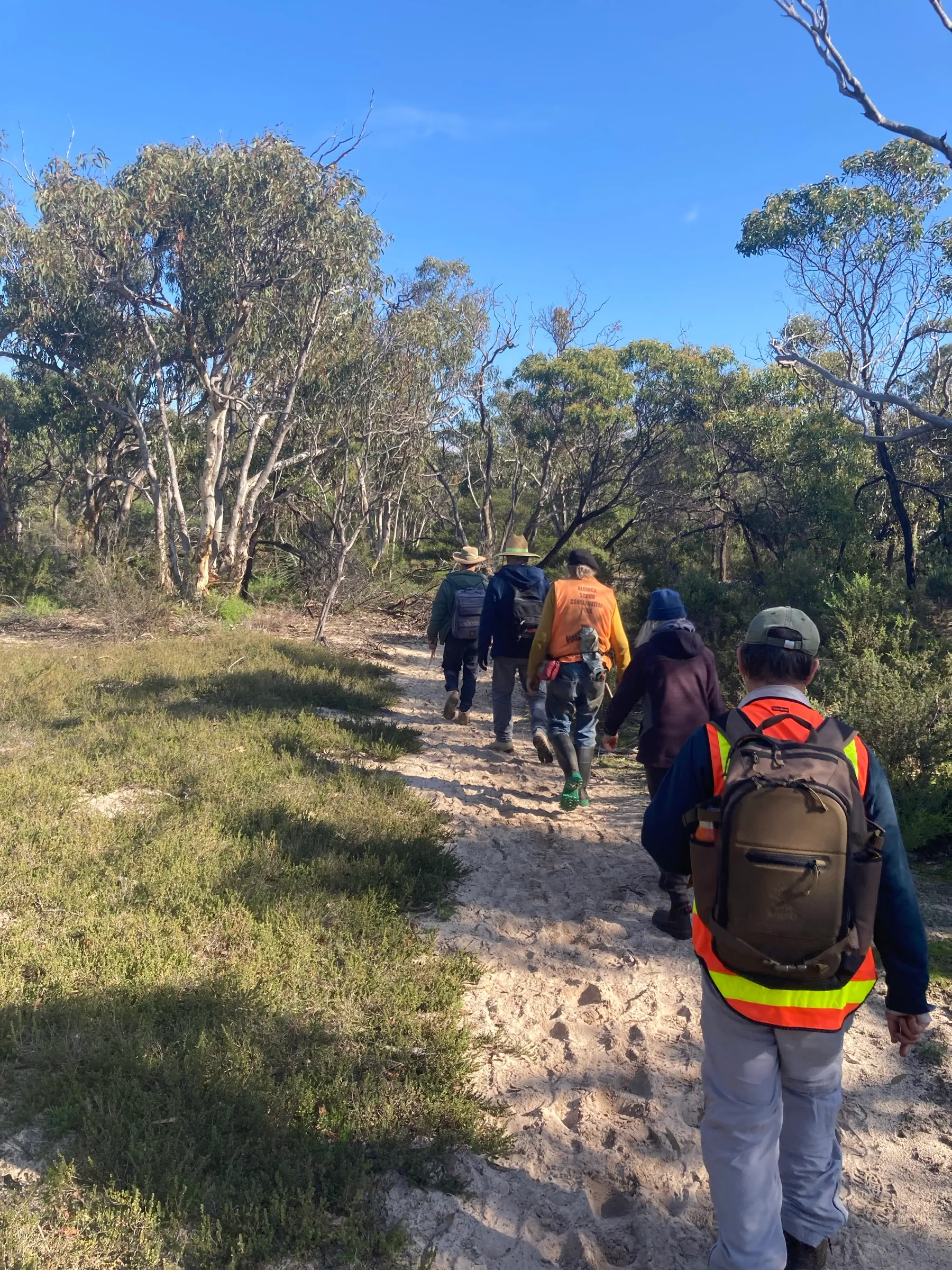
- Achieved significant reduction of lavender through hand weeding (Bradley Method), directly resulting in increased orchid flowering.
- Collaborated with Sevenhill Winery and local volunteers to expand weed suppression around emerging rosettes.
Key Threats & Pressures
- Invasive weeds (specifically dense Topped Lavender infestations)
- Habitat degradation and agricultural edge effects
- Competition from introduced bulbs and exotic grasses
Project Background
This project builds on long-term recovery work for the Endangered White Beauty Spider-orchid (Caladenia argocalla) and remnant temperate native grasslands across the Northern and Yorke region.
Recent years have seen successful collaboration between TPAG, local landholders, and Sevenhill Winery to actively manage weed threats and improve habitat quality across critical surviving populations.
On-Ground Actions & Methods
Our team employs minimal-disturbance hand-weeding using the Bradley Method, carefully removing invasive weeds from the edges inward without disturbing fragile soil mycorrhizae or orchid tubers.
Rigorous annual population counts track flowering rates, vegetative health, and seedling emergence in response to weed clearing.
Future Outlook
Continued monitoring and ongoing maintenance of cleared weed patches will ensure that lavender and other invasive species do not re-establish, allowing the orchid colony to flourish.
Read the 2025 Annual Report
Discover full census tables, monitoring methodologies, and detailed appendices for this project.