
Calochilus cupreus
Copper Beard-orchid
Location
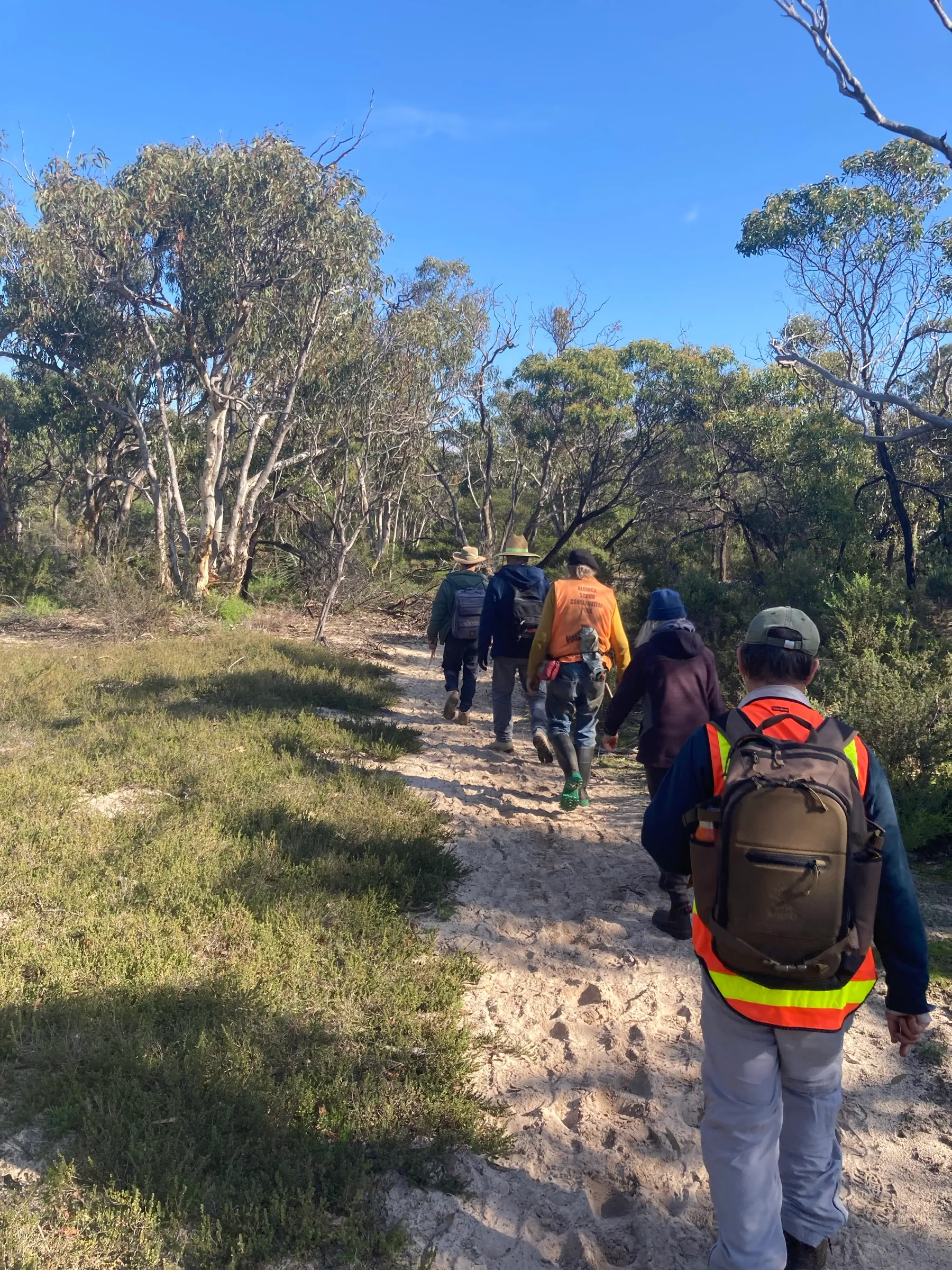
Aldinga Scrub Conservation Park
Adelaide Plains / Fleurieu
Project Lead
Rhys Morgan & Dr Rick Davies
Key Partners
Friends of Aldinga Scrub Conservation Park (FOAS), Native Orchid Society of South Australia (NOSSA), National Parks and Wildlife Service (NPWS)
Grants & Funding: NPWS Friends of Parks Partnership Grant ($32,380 over two years)
2024–2025 Milestones
- Expert weed contractor Tim Jury completed 90 hours of targeted weed management in and around the protective exclosure in 2024.
- Notable decline observed across all primary target weeds (Bridal Creeper, Soursob, and Veldt Grass).
- Pre-spray coordination with orchid expert Thelma Bridle to pinpoint exact orchid coordinates and emergence windows.
- Maintained the integrity of the kangaroo-proof fence constructed in 2016 to prevent animal trampling.
Key Threats & Pressures
- Human and kangaroo trampling of fragile sandy soils and orchid tubers
- Invasive weeds including Bridal Creeper, Soursob, Perennial Veldt Grass, and European Olive
- Newly emerging Coastal Galenia (Galenia pubescens) infestations
A Species on the Brink
The Copper Beard-orchid (Calochilus cupreus) is one of South Australia’s rarest flowering plants. Confined entirely to Aldinga Scrub Conservation Park on the southern Adelaide Plains, this single location represents the entire global population of the species.
In 2014, former TPAG project officer Tim Jury prepared the nomination that successfully listed the orchid as Critically Endangered under the Federal EPBC Act, citing kangaroo trampling, recreation pressures, and aggressive weed competition as chief threats.
Exclosures and Precision Weeding
To safeguard the colony, a dedicated kangaroo-proof exclosure was built in 2016. Within and surrounding this protective fence, TPAG and FOAS have coordinated intensive weed removal to suppress bridal creeper, soursob, and veldt grass.
In 2024, 90 hours of delicate contractor weeding achieved a marked reduction in weed density. Emerging patches of Coastal Galenia (Galenia pubescens) were also eliminated before they could gain a foothold in the sandy soils.
The Value of Collaboration
The ongoing recovery of Calochilus cupreus stands as a testament to deep community collaboration between TPAG, Friends of Aldinga Scrub, NOSSA orchid specialists, and dedicated NPWS rangers who inspect and protect the site year-round.
Read the 2025 Annual Report
Discover full census tables, monitoring methodologies, and detailed appendices for this project.