
Lachnagrostis limitanea
Spalding Blown-grass
Location
Tarlee & Yakkalo (near Spalding)
Northern and Yorke
Project Lead
Dr. Rick Davies & Tim Jury
Key Partners
Northern and Yorke Landscape Board, Rail corridor management authorities, Adjacent agricultural landholders
Grants & Funding: Landscapes SA Grassroots Grant ($9,768) and Bite-Sized Grant ($2,000)
2024–2025 Milestones
- Slashed approximately 13,000 m² of weed grass biomass along the Tarlee rail line and 4,000 m² at Yakkalo.
- Flail-brushcut and spot-sprayed dense Scabious and Artichoke Thistle stands to create space for native recruitment.
- Census confirmed 1,440 plants at Yakkalo—a threefold increase compared to counts in 1994–1995.
- Counted 730 surviving plants at the Tarlee railway site despite extended regional dry spells.
Key Threats & Pressures
- Dense choking infestations of Scabious (Scabiosa atropurpurea) and Tall Wheatgrass
- Competition from annual weed grasses (Wild Oats, Phalaris, Rice Millet)
- Herbicide drift and roadside grading operations during corridor maintenance
- Vulnerability of narrow, linear populations surrounded by cropping paddocks
Restricted to Narrow Corridors
Spalding Blown-grass (Lachnagrostis limitanea) is a graceful perennial grass endemic to the Mid North of South Australia. With only two viable naturally occurring populations left on Earth—one near Tarlee along an abandoned rail corridor and another at Yakkalo near Spalding—the species is in critical need of hands-on stewardship.
Both sites represent irreplaceable strips of temperate native grassland surrounded by intensive grain cropping country, also sheltering rare native associates like Barren Cane-grass and Red-legged Grass.
2024 Threat Management
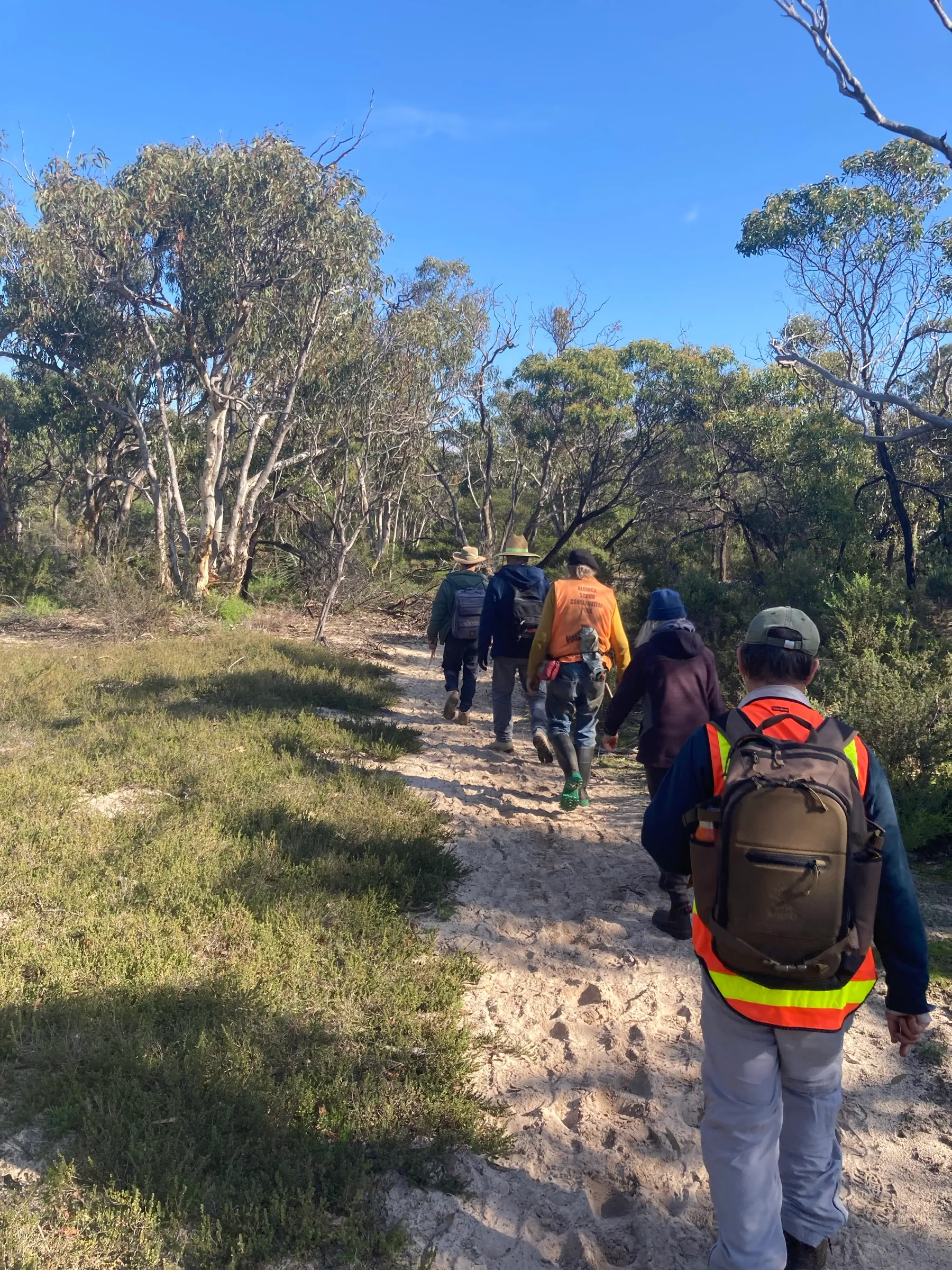
Over eight days of intensive fieldwork in 2024, expert contractor Tim Jury slashed over 17,000 square metres of exotic grasses to prevent weed seed set and reduce fuel loads. Tough woody infestations of Mediterranean Scabious (Scabiosa atropurpurea) required brushcutting with flail blades before selective herbicide application was possible.
These interventions prevent vigorous introduced grasses from out-shading and starving the delicate blown-grass seedlings.
Encouraging Population Census
Systematic counts revealed that the Yakkalo population has expanded to 1,440 plants—almost three times the 524 plants recorded thirty years ago. This remarkable recovery proves that sustained weed suppression directly bolsters native seed recruitment and long-term viability.
Read the 2025 Annual Report
Discover full census tables, monitoring methodologies, and detailed appendices for this project.