
Lycopodium deuterodensum
Bushy Club-moss
Location
Cleland National Park (Eurilla Track)
Mount Lofty Ranges
Project Lead
Felicia Carli & Rhys Morgan
Key Partners
Cleland National Park Rangers, Department for Environment and Water (DEW)
Grants & Funding: TPAG Volunteer-Led Project
2024–2025 Milestones
- Completed systematic survey of Site 1 on 8 June 2024 along Eurilla Track in Cleland National Park.
- Recorded 1,289 living shoots across twelve permanent 1m × 1m quadrats along a 15-metre belt transect.
- Discovered evidence that the club-moss survives harsh dry periods via underground rhizomes, sprouting fresh green shoots from the base of dead mature stems.
- Mapped surrounding Blackberry and Erica infestations for coordinated follow-up with park rangers.
Key Threats & Pressures
- Severe drought stress and dry winter seasons browning upper foliage
- Browsing of tender emerging juvenile shoots by native herbivores
- Encroachment by Blackberry (Rubus fruticosus) and weedy Erica heath seedlings
A Primitive Relic in the Stringybarks
Bushy Club-moss (Lycopodium deuterodensum) is an ancient, spore-bearing vascular plant that resembles miniature pine trees scattered across the moist sandy understorey of Eucalyptus obliqua forest near Mount Lofty summit.
In South Australia, the species occurs only in a handful of isolated colonies in the Mount Lofty Ranges, making every population vital to statewide genetic diversity.
The 2024 Winter Survey
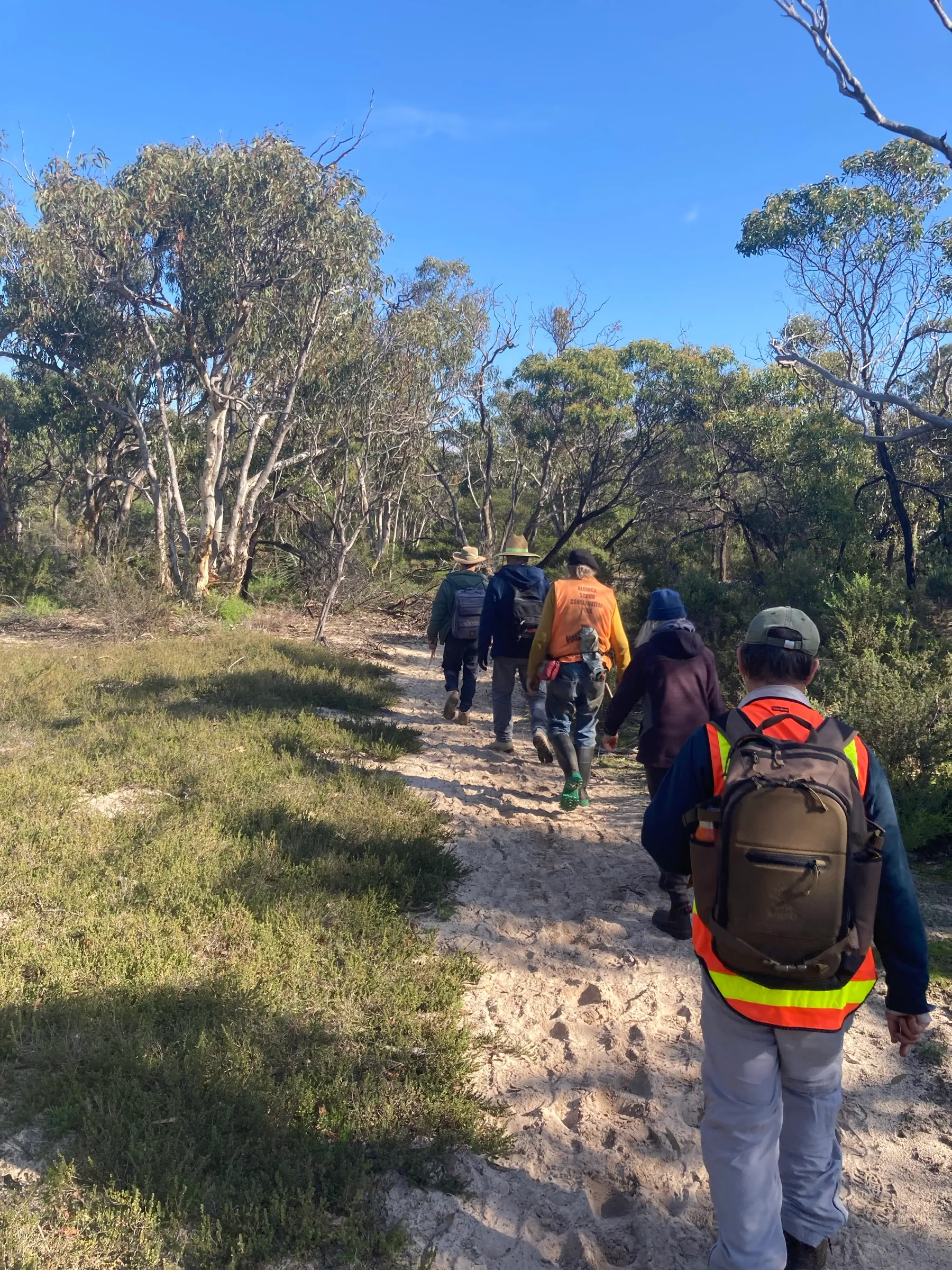
On 8 June 2024, TPAG researchers and Cleland NP Ranger Flynn surveyed permanent belt transects along Eurilla Track. While low rainfall had caused dry browning across older foliage, the census recorded an impressive 1,289 living erect shoots.
Importantly, researchers noted healthy new juvenile shoots emerging directly from subterranean rhizomes, showing that the colony possesses considerable underground resilience during drought years.
Managing Weed Threats
Blackberry canes and invasive Erica seedlings were identified immediately adjacent to transect droppers. TPAG is working with Cleland rangers to undertake delicate removal so that weeds do not shade out this rare ancient club-moss.
Read the 2025 Annual Report
Discover full census tables, monitoring methodologies, and detailed appendices for this project.