
Pterostylis arenicola
Sandhill Greenhood Orchid
Location
The Grange Golf Course & Mowantjie Willauwar CP
Adelaide Metropolitan & Murraylands
Project Lead
Tim Reynolds & Sarah Stewart
Key Partners
The Grange Golf Club, Trees For Life, Green Adelaide, Murraylands and Riverland Landscape Board (MRLB), National Parks and Wildlife Service (NPWS)
Grants & Funding: Green Adelaide Grassroots Grant ($143,000 over 3 years), Friends of Parks Partnership Grant ($20,807), and MRLB Grassroots Grant ($20,406)
2024–2025 Milestones
- The annual census at Grange Golf Course recorded 2,315 plants in September 2024—the highest count in 30 years (up from fewer than 60 plants in 2007).
- Secured a major $143,000 three-year Green Adelaide grant to expand habitat recovery to 8 additional remnant vegetation sites at Grange.
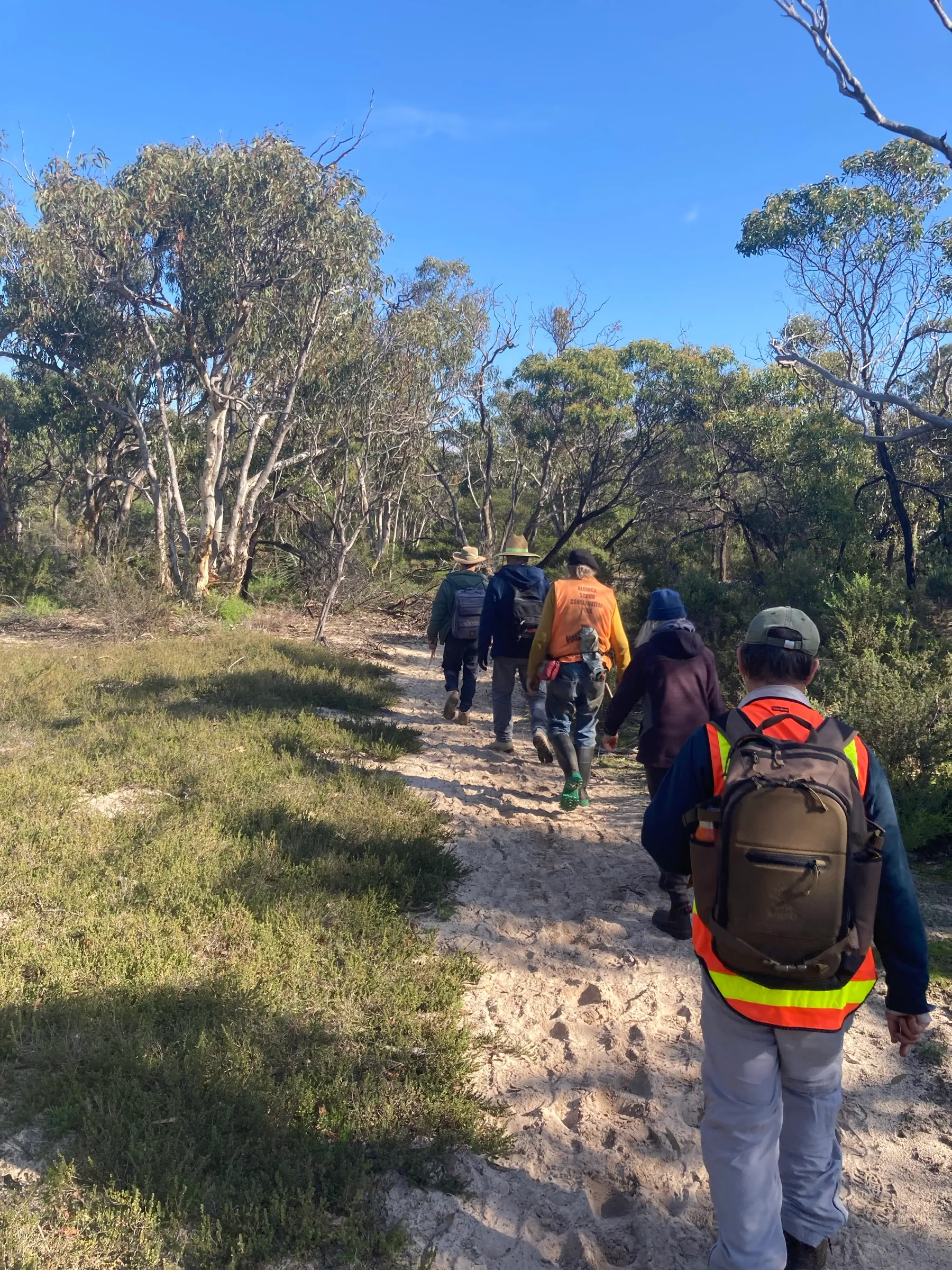
- TPAG recovery volunteers contributed 630 hours at Grange and 56 volunteer hours at Mowantjie Willauwar Conservation Park.
- Monitored 809 plants across three sub-colonies at Mowantjie Willauwar with an average plant density of 30 per square metre.
Key Threats & Pressures
- Severe trampling damage from major sporting spectator events (LIV Golf tournament crowds)
- Competition from Perennial Veldt Grass, Bridal Creeper, Soursob, and invasive bulbs
- Grazing and soil disturbance by rabbits
- Extended drought and exceptionally dry winter/spring conditions
The Grange Golf Course Remnants
The Grange Golf Course is one of the very few places in metropolitan Adelaide where pre-European coastal vegetation still survives. Several plant species found here exist nowhere else on the Adelaide Plains, including a thriving population of the endemic Sandhill Greenhood (Pterostylis arenicola).
Thirty years of dedicated conservation by TPAG—including weed control, orchid marking, fencing, and educating golf course staff and members—has enabled the colony to expand from fewer than 60 plants in 2007 to an extraordinary record count of 2,315 plants in September 2024.
Mowantjie Willauwar Conservation Park
Near Wellington, Mowantjie Willauwar Conservation Park protects another large population of Sandhill Greenhoods within Callitris gracilis (Native Pine) low woodland. Weeds like Perennial Veldt Grass and Bridal Creeper increase fire hazard and compete directly with orchids for scarce moisture.
In 2024, our volunteer team teamed up with MRLB Threatened Flora Officer Victoria Hefford and bushcare contractors to conduct weed treatments and sample 809 plants across permanent nested monitoring quadrats.
Threats & Future Recovery
The 2024 season was marked by exceptionally low rainfall, resulting in withered rosettes and reduced flowering rates. In addition, post-match spectator crowds at the LIV Golf tournament caused trampling damage to significant remnant vegetation. In late 2024, TPAG and Trees For Life kicked off an expanded 3-year recovery program to repair damaged areas and expand conservation to eight new remnant patches.
Read the 2025 Annual Report
Discover full census tables, monitoring methodologies, and detailed appendices for this project.