
Caladenia gladiolata, Caladenia woolcockiorum, Veronica parnkalliana, Eucalyptus odorata
Peppermint Box Grassy Woodland & Threatened Flora
Location
Mt Remarkable National Park (Willowie Block)
Flinders & Outback
Project Lead
Friends of Mount Remarkable / TPAG (Meg Robertson & Rick Davies)
Key Partners
Friends of Mount Remarkable National Park (FoMRNP), Biology Society of South Australia (BSSA), National Parks and Wildlife Service (Yorke and Mid North District), Irongrass Environmental Rehabilitation Services (IERS)
Grants & Funding: Friends of Parks & Nature Partnership Grant
2024–2025 Milestones
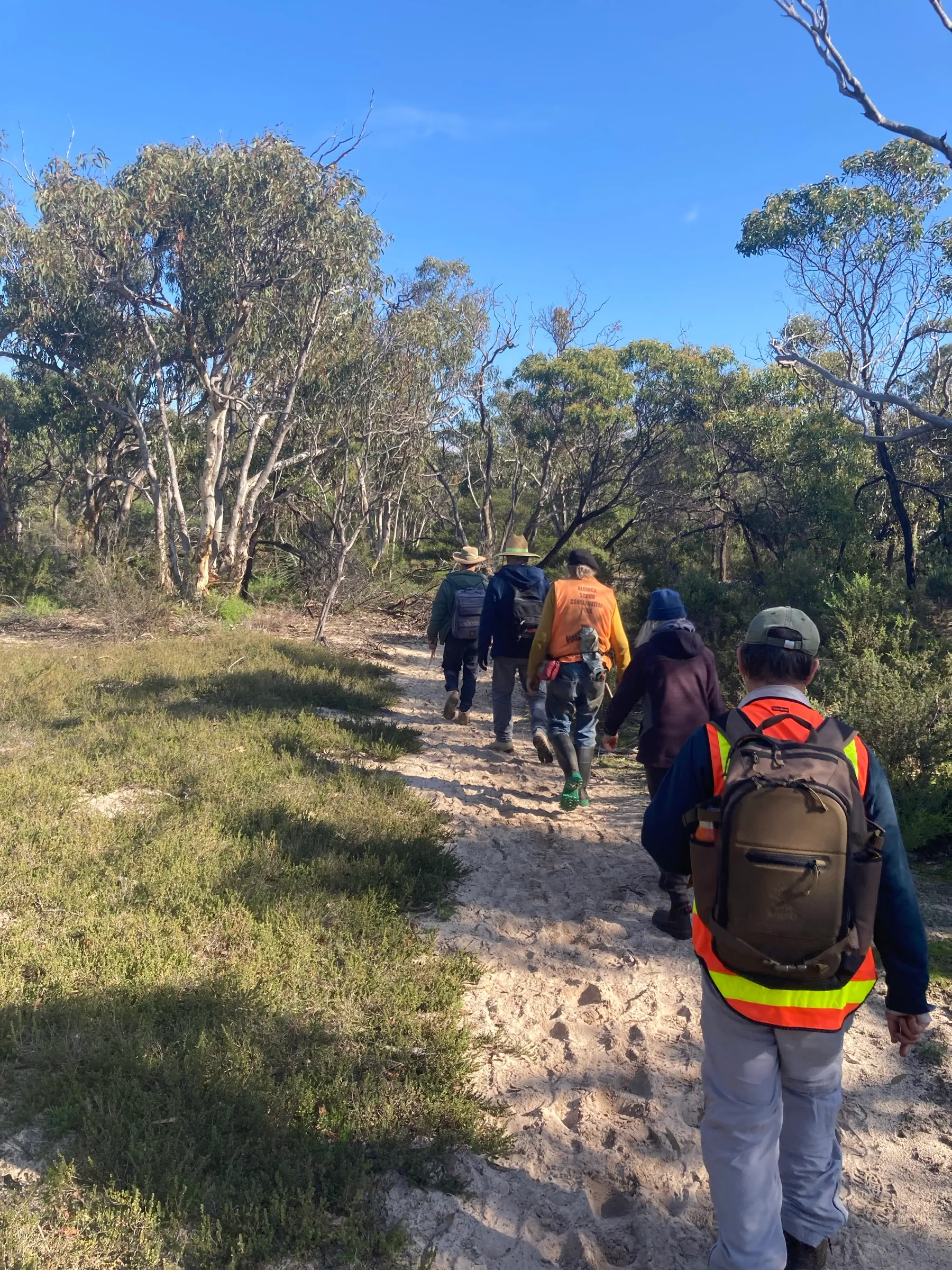
- Conducted intensive 5-day field trip with nine botanists and volunteers, monitoring Peppermint Box woodland and rare flora.
- Contractors and volunteers treated extensive Soursob infestations using dye-marked herbicides and GPS mapping.
- Established four permanent belt transects and re-monitored four BDBSA quadrats to evaluate soursob control.
- Monitored recovery of the endangered Bayonet Spider-orchid (Caladenia gladiolata) following recent bushfire impacts.
Key Threats & Pressures
- Overabundant kangaroo, euro, and deer populations exerting heavy grazing pressure
- Invasive weeds including Soursob (Oxalis pes-caprae), Horehound, and African Boxthorn
- Trail construction and off-track bike recreation causing soil erosion and weed spread
- Recent bushfires impacting sensitive orchid habitats
Woodlands of High Conservation Value
Peppermint Box (Eucalyptus odorata) Grassy Woodland is a Critically Endangered ecological community endemic to South Australia. The Willowie Block of Mount Remarkable National Park protects one of the state’s largest remaining stands, harbouring high understorey plant diversity.
In addition to the woodland community itself, the park is home to several nationally endangered plants, including the Bayonet Spider-orchid (Caladenia gladiolata), Woolcock’s Spider-orchid (Caladenia woolcockiorum), and the rare shrub Veronica parnkalliana.
Addressing Weeds & Herbivore Pressure
Weed management prioritises Soursob (Oxalis pes-caprae), which forms dense carpets that smother native herbs and orchids. Specialist contractors from IERS and volunteer teams treated infestations and mapped them with GPS.
Grazing pressure from native macropods, feral goats, and deer is also tracked to inform park fencing and management strategies.
Science-Led Park Management
TPAG works in close partnership with the Friends of Mount Remarkable and NPWS rangers to ensure on-ground weed and fire management decisions are grounded in sound ecological data.
Read the 2025 Annual Report
Discover full census tables, monitoring methodologies, and detailed appendices for this project.