
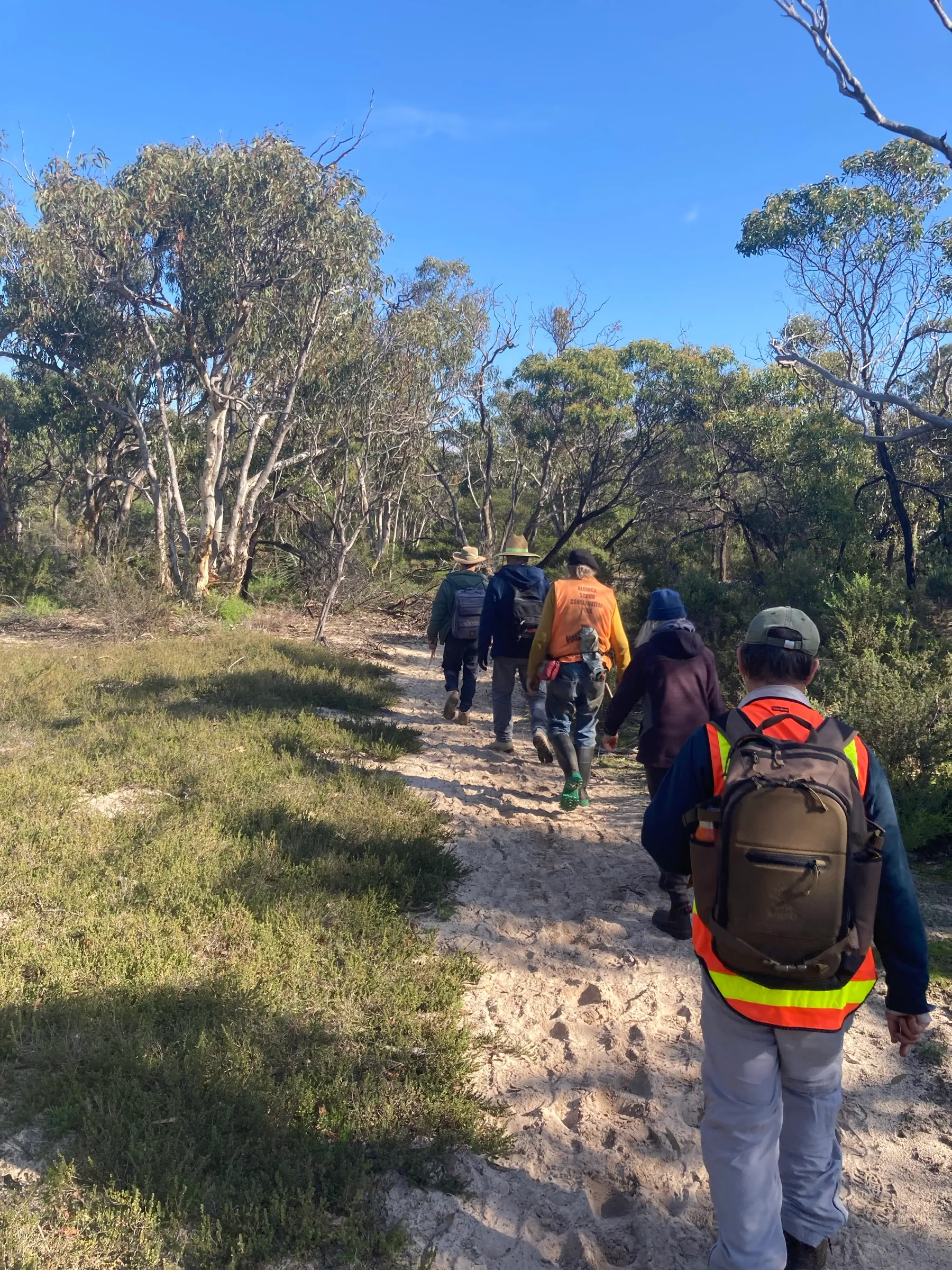
Prasophyllum murfetii & Amphibromus archeri
Maroon Leek Orchid & Fleurieu Swamps
Location
Stipiturus Conservation Park, Yundi Nature Conservancy, Nangkita
Hills and Fleurieu
Project Lead
Mitchell Livingston (Coordinator)
Key Partners
Friends of Stipiturus Conservation Park, Fleurieu Swamps Network, Native Orchid Society of SA (NOSSA), Hills and Fleurieu Landscape Board
Grants & Funding: Hills and Fleurieu Landscape Board Grassroots Grant
2024–2025 Milestones
- Ongoing quantitative monitoring of Prasophyllum murfetii populations at Stipiturus CP and private properties.
- Organised collaborative field events with the Fleurieu Swamps Network to restore wetland ecotones.
- Engaged with local landholders to remove Phragmites monocultures and improve overall swamp ecological health.
Key Threats & Pressures
- Phragmites australis (Common Reed) invasion and dense monoculture choking out wetland ground flora
- Historical habitat degradation, draining, and wetland fragmentation
- Drought and altered hydrology impacting peat swamp moisture levels
Protecting Australia’s Rarest Swamps
Fleurieu Peninsula Swamps are localised wetland communities occurring in the peaty catchments of the Mount Lofty Ranges. Listed as Critically Endangered under Commonwealth environmental law, they shelter a unique assemblage of threatened plants and wildlife, including the rare Maroon Leek Orchid (Prasophyllum murfetii).
TPAG is actively working across both protected reserves like Stipiturus Conservation Park and private heritage properties to protect and restore remaining swamp pockets.
On-Ground Actions & Restoration
Volunteers and specialists employ hand-weeding to manage invasive weeds in sensitive waterlogged soils, avoiding compaction and sediment disturbance.
We also work alongside landholders to selectively manage Phragmites australis reed monocultures, creating open sunny microhabitats that allow leek orchids, swamp grasses, and sedges to recolonise.
Future Outlook & Field Days
TPAG continues long-term population tracking and is expanding restoration activities, with upcoming volunteer field days scheduled across December and January.
Read the 2025 Annual Report
Discover full census tables, monitoring methodologies, and detailed appendices for this project.