
Tessa Carella
Restoring Habitat for the Endangered White Beauty Spider-orchid
This article shares updates from our two volunteer field days this year at Sevenhill for the C.argocalla recovery project.
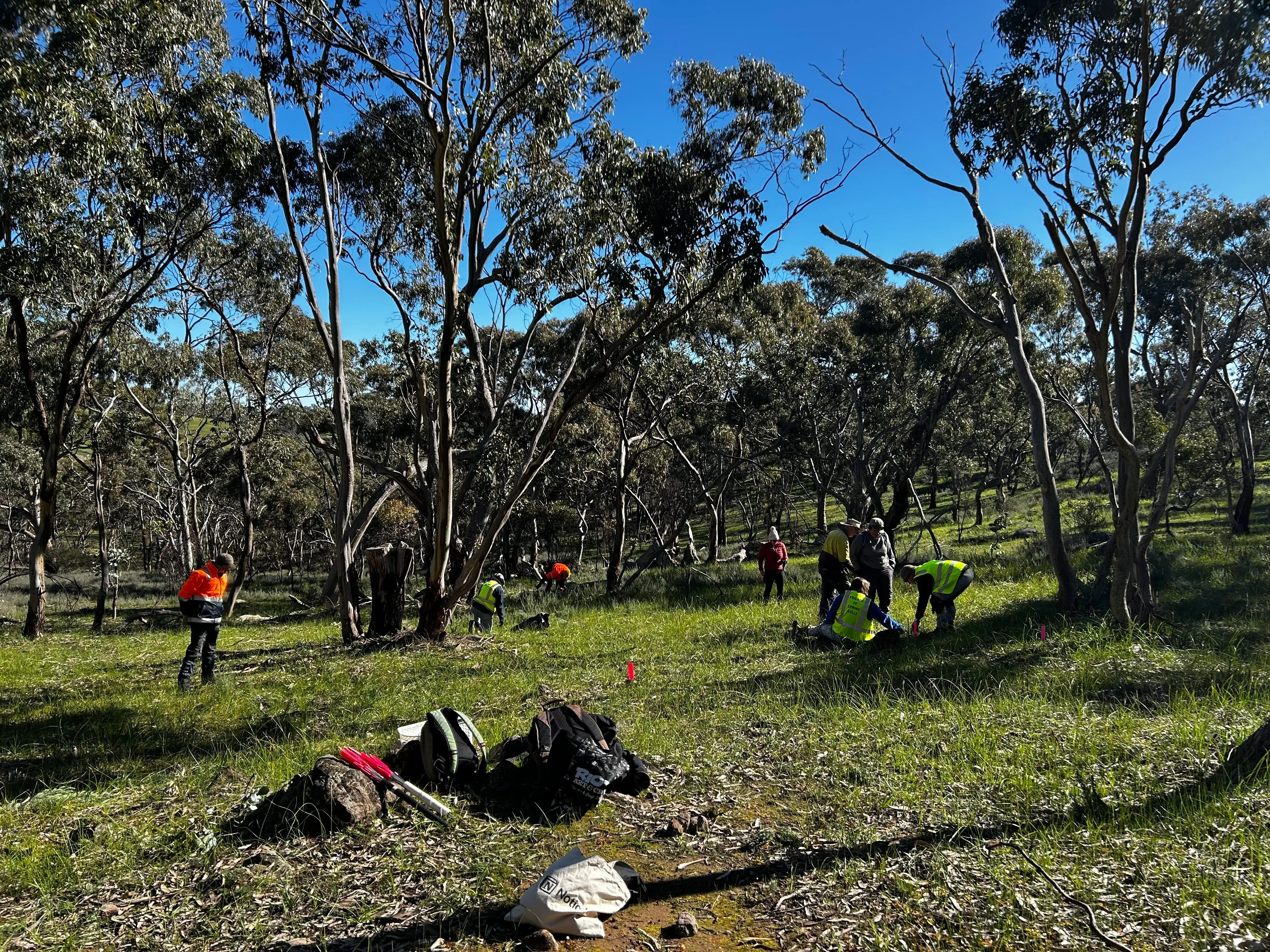
Earlier this year, TPAG held two volunteer working bees to work on restoring habitat at the Sevenhill Cellars Bush Block in the Clare Valley. This site represents the largest remaining remnant population of the nationally endangered orchid, Caladenia argocalla.
Did you know
The primary threat to the orchid’s persistence is habitat degradation driven by invasive environmental weeds, most notably Topped Lavender (Lavandula stoechas). This weed outcompetes the orchid for vital moisture and nutrients, preventing the recruitment of new individuals.
Vollie Weeding Day
Our first working bee day took place on the 2nd August 2026, and 13 volunteers from TPAG, NOSSA and Friends of Spring Gully Conservation Park showed up to tackle the Topped Lavender together.
After taking a tour of the site and marking the location of orchid leaves that had already emerged, we began weeding using non-invasive hand-pulling techniques.
We prioritised removal of the lavender from spots closest to existing orchid populations, working outwards in a radial area. By the end of the day, we were satisfied with the progress made on pushing back the lavender weed front. We were able to clear away any lavender that was in the near vicinity of emergent orchid leaves, giving the orchids the best chance possible to flower and set seed in September/November.
Vollie Monitoring Day
On Saturday the 3rd October 2026, 9 volunteers came together to survey the White Beauty Spider Orchid population, which typically flowers in September-October.
We recorded the coordinates and features of 850 plants in total, with 844 of them flowering. 19% (162 plants) experienced probable herbivory (stem present, flower missing), 62% (530 plants) had single flowers, and 11% (96 plants) had double flowers. We even found one C.argocalla specimen that had triple flowers!!
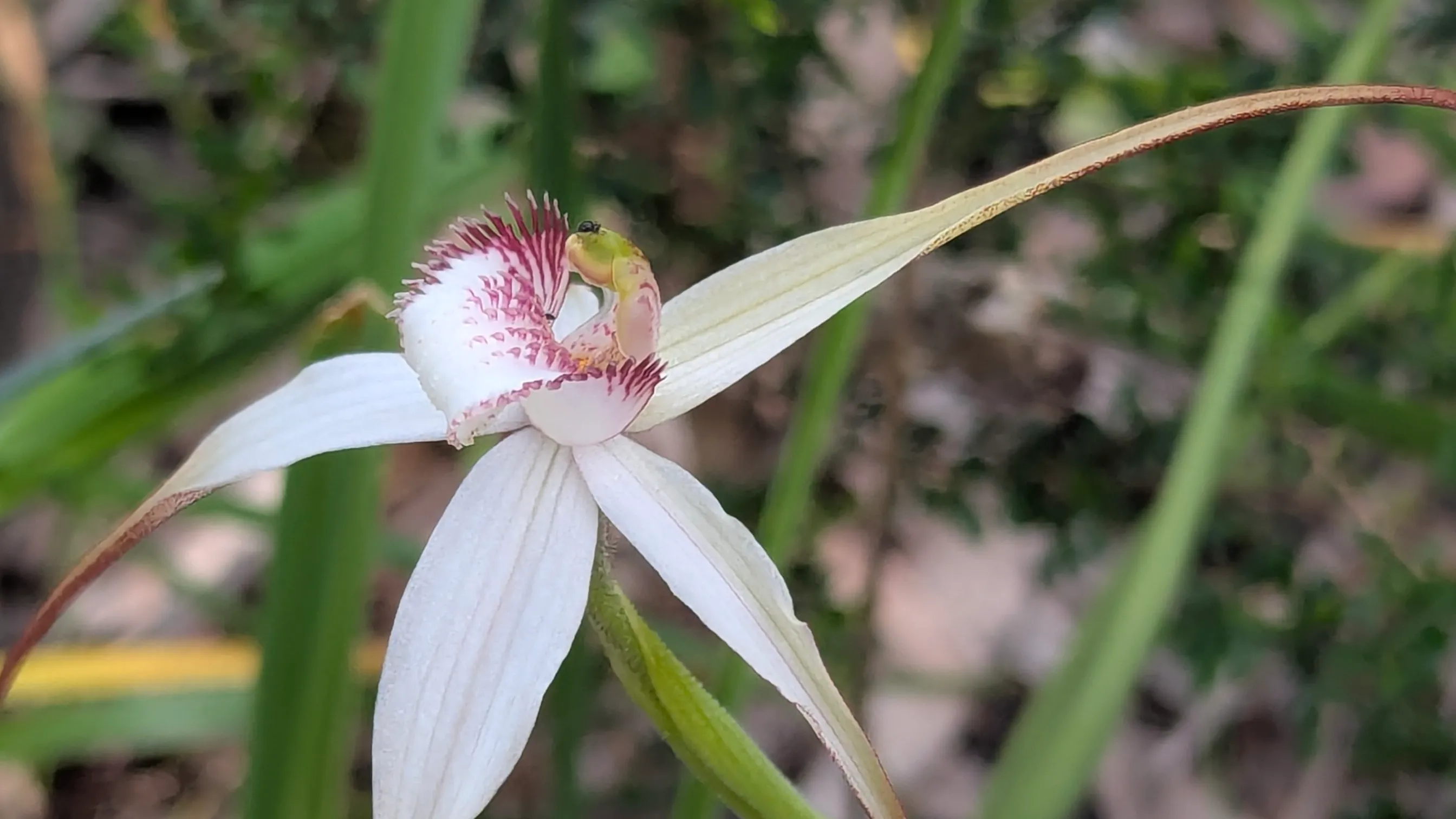
Photograph of flowering C.argocalla at monitoring day. (Robert Lawrence, October 2026)
So, how does this year’s count compare to past years of surveying? Well, in October 2022, the number of flowering plants recorded was a whopping 2987 orchids! The following year, October 2023, this went down to only 125 flowering plants. However, due to a period of hot weather that year, the flowering season was much shorter and only a partial count was feasible, explaining the lower record.
Acknowledgements
A huge thank you to all our amazing volunteers for being involved in the project this year and contributing your valuable time and energy.
TPAG would like to thank NOSSA and Friends of Spring Gully for their partnership in this event and shared expertise on the day from volunteers. TPAG would also like to thank the Northern and Yorke Landscape Board for supporting this project with their Grassroots Grant, the work we did this year wouldn’t have been possible without them!